
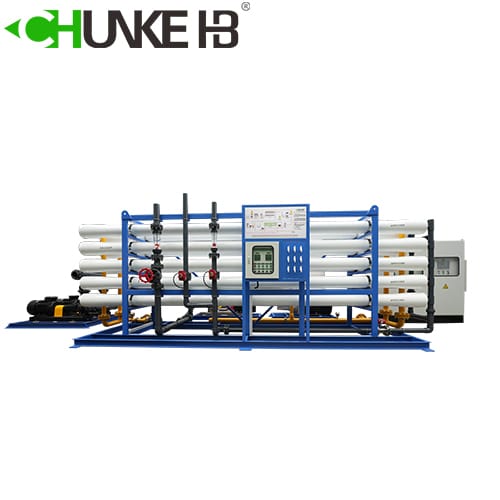
Skid mounted seawater desalination plant solutions give project owners a practical way to turn seawater into fresh water with faster installation, organized piping, and easier maintenance. When a customer has an equipment room, utility building, or prepared platform, a skid mounted seawater desalination plant often becomes a better choice than a fully containerized unit. Moreover, this layout gives engineers more flexibility in equipment arrangement, future expansion, and maintenance access.
What Is a Skid Mounted Seawater Desalination Plant?
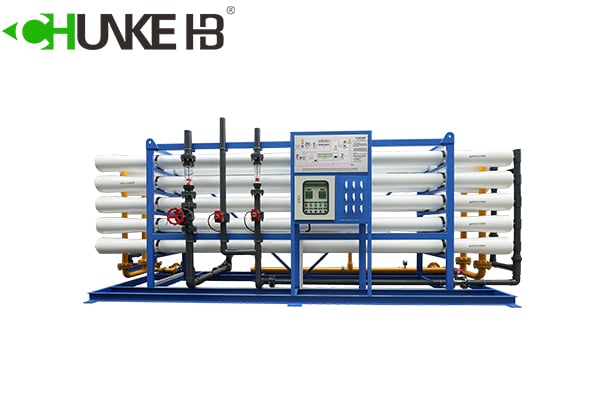
A skid mounted seawater desalination plant is a seawater treatment system assembled on one or more steel skids before shipment. The manufacturer installs major equipment such as pumps, cartridge filters, membrane pressure vessels, instruments, valves, and control panels on a structured frame. As a result, the customer receives a compact and organized system that reduces on-site fabrication work.
Unlike loose equipment supply, a skid mounted seawater RO system arrives as an integrated unit. Therefore, site installation becomes easier, piping connections become clearer, and commissioning time often becomes shorter. In addition, operators can inspect the equipment more easily because the open skid structure gives better access to pumps, membrane housings, sensors, and valves.
Why Many Buyers Choose a Skid Mounted SWRO Plant
Many buyers choose a skid mounted seawater desalination plant because it offers several practical benefits.
First, the system gives better maintenance access. Technicians can reach valves, filter housings, membrane vessels, and pumps more quickly. Consequently, daily inspection and service work become easier.
Second, the layout allows more flexible customization. Engineers can separate the pretreatment skid, RO skid, CIP skid, and control section according to the building layout. Therefore, the project owner can use the available space more efficiently.
Third, the skid design supports easier future expansion. If water demand increases later, the customer can often add another skid or upgrade part of the system without changing the entire plant concept.
Finally, the skid mounted seawater desalination plant often suits industrial and commercial projects that already have civil works, tanks, utilities, and drainage prepared at site. In these situations, an open skid design may create a cleaner and more service-friendly solution than a compact container arrangement.
How a Skid Mounted Seawater Desalination Plant Works
A skid mounted seawater desalination plant normally follows the standard seawater reverse osmosis process. First, the system takes seawater from the sea, beach well, raw water tank, or intake line. Next, the pretreatment section removes suspended solids, reduces fouling risk, and prepares the water for high-pressure RO treatment. After that, the high-pressure pump pushes the seawater through seawater RO membranes. The membranes separate the flow into permeate water and concentrate water. Finally, the plant sends the fresh water to a product tank or post-treatment section.
A typical process flow looks like this:
Seawater intake → raw water tank → feed pump → pretreatment → chemical dosing → cartridge filtration → high-pressure pump → SWRO membranes → product water tank → post-treatment if required
Main Components of a Skid Mounted Seawater Desalination Plant
1. Seawater Intake and Feed Section
The intake side brings seawater from the source to the pretreatment system. This section may include an intake pump, raw water tank, suction piping, valves, and a feed pump. The design must match the actual site conditions. For example, open sea intake, beach well intake, and tank-fed intake all require different engineering attention.
Moreover, the material selection matters. Seawater can attack unsuitable metals very quickly. Therefore, the engineer must choose proper materials for pumps, piping, and fittings based on salinity, temperature, and pressure.
2. Pretreatment System
Pretreatment protects the RO membranes. Without good pretreatment, the system may suffer from fouling, scaling, higher pressure drop, frequent cleaning, and unstable product water quality. Therefore, the pretreatment section plays a major role in long-term performance.
3. Chemical Dosing System
A skid mounted seawater desalination plant usually includes several chemical dosing points. These may include flocculant, bactericide, antiscalant, reducing agent, or pH adjustment chemicals. However, the exact chemicals depend on the raw water analysis and final process design.
Because the wrong chemical approach can damage membranes or reduce performance, the supplier must evaluate the feed water carefully. In addition, dosing pumps, tanks, mixers, injection valves, and control logic should match the actual operating conditions.
4. Cartridge Filters
Cartridge filters remove fine suspended solids before the water enters the high-pressure pump and membrane vessels. This section looks simple, yet it protects expensive downstream components. Therefore, operators should monitor cartridge differential pressure and replace filters at the right time.
5. Select Suitable Membranes and Core Components
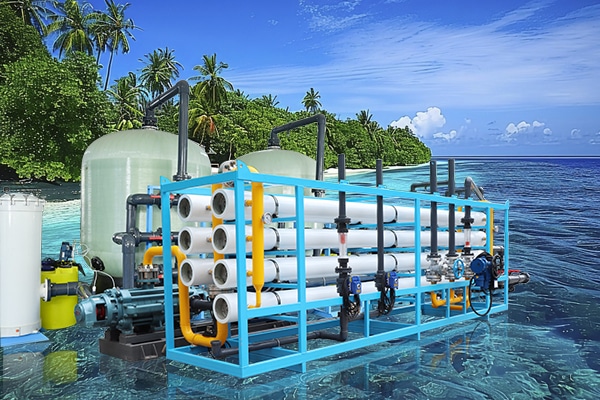
RO membranes decide salt rejection, water quality, operating pressure, and energy consumption. Therefore, you should choose the membrane model carefully. For seawater projects, the system must use seawater RO membranes, not brackish water RO membranes.
6. High-Pressure Pump
The high-pressure pump gives the RO system the pressure it needs to overcome osmotic pressure and produce fresh water. This component directly affects operating stability and power consumption. Therefore, the engineer should select the pump by flow, head, efficiency, material, and operating range, not only by brand name.
7. Energy Recovery Device
For larger systems, an energy recovery device can reduce energy consumption significantly. The concentrate stream leaves the membrane section with pressure energy still inside it. Instead of wasting that energy, the system can transfer part of it back to the feed side.
8. PLC Control and Electrical System
A modern skid mounted seawater desalination plant needs a practical control system. Operators should monitor pressure, flow, conductivity, ORP, tank level, and alarm status from one place. In addition, the system should support automatic start, stop, flushing, and protective shutdown logic.
9. CIP Cleaning System
A cleaning-in-place system helps restore membrane performance after fouling or scaling. Usually, the CIP section includes a cleaning tank, pump, filter, valves, and return piping. When operators use the right cleaning procedure, they can improve membrane life and stabilize performance.
Skid Mounted vs Containerized Seawater Desalination Plant
A skid mounted seawater desalination plant and a containerized system can both produce reliable fresh water. However, they do not serve the same project conditions.
A skid mounted design usually works better when:
- the site already has a building or covered installation area
- the owner wants easier maintenance access
- the project may expand later
- the customer prefers a more open equipment arrangement
- the plant needs easier connection with other site utilities
A containerized design usually works better when:
- the project needs a transportable packaged unit
- the installation site is remote
- the owner wants an enclosed system body
- the project needs fast movement between locations
- site civil works are limited
Common Applications of a Skid Mounted Seawater RO System
A skid mounted seawater desalination plant can serve many different industries and project types. For example, it can produce drinking water for island communities and resorts. It can also supply process water for factories and utility water for coastal projects.
Common applications include:
- island drinking water supply
- hotels and resorts
- seafood processing plants
- marine and coastal facilities
- factories and industrial utilities
- mining camps and remote bases
- power and energy projects
- hospitals and institutional facilities
Because every application has different water quality targets, the engineer should confirm whether the project needs only basic desalination or additional post-treatment such as remineralization, UV sterilization, or final disinfection.
Key Design Information Buyers Should Prepare
Before you request a quotation for a skid mounted seawater desalination plant, you should prepare several key items. This information helps the supplier design the system correctly and avoid mistakes.
Please prepare:
- required product water capacity per hour or per day
- raw water source and seawater analysis report
- feed water temperature
- target product water quality
- operating hours per day
- available power supply
- installation location and space
- preferred control level
- special material requirements
- whether you need skid mounted or containerized installation
What Affects Skid Mounted Seawater Desalination Plant Cost?
Price depends on much more than capacity. In reality, raw water quality, membrane brand, recovery rate, pretreatment complexity, automation level, material selection, energy recovery, and electrical specifications all influence the final cost.
For example, a small commercial seawater desalination system with standard automation will cost less than a large turnkey seawater desalination plant with duplex high-pressure piping, premium instruments, and energy recovery. Likewise, a plant designed for severe seawater conditions may require stronger pretreatment and higher component quality.
Why Choose Chunke for a Skid Mounted Seawater Desalination Plant?
Chunke designs customized SWRO systems for industrial, commercial, and island applications. Our team focuses on practical system design, suitable component selection, and long-term operational stability. Therefore, we do not only look at output capacity. We also review feed water quality, operating conditions, power availability, maintenance access, and project goals.
Final Thoughts
A skid mounted seawater desalination plant gives many project owners a reliable and flexible solution for producing fresh water from seawater. It supports easier maintenance, better layout flexibility, and practical integration into permanent installations. However, the right design always depends on seawater quality, product water target, operating conditions, and site requirements.
If you are planning a new skid mounted seawater desalination plant, fill in the form and send us your project details. Our team will review your requirements and contact you with a suitable technical solution.

Comments are closed for this post.