
A seawater desalination machine turns endless ocean water into clean, drinkable fresh water, so coastal towns, islands, resorts, ships, and factories never run dry again. Water scarcity hits harder every year, and many regions sit right next to the sea yet still struggle to find safe drinking water. Hence, more buyers now choose reverse osmosis desalination instead of trucking water over long distances. At Chunke, we design and manufacture these systems in China and ship them to customers across the world. So in this guide, we explain how the technology works, what parts matter most, how to size a system, and why so many overseas buyers trust our machines.
What Is a Seawater Desalination Machine?
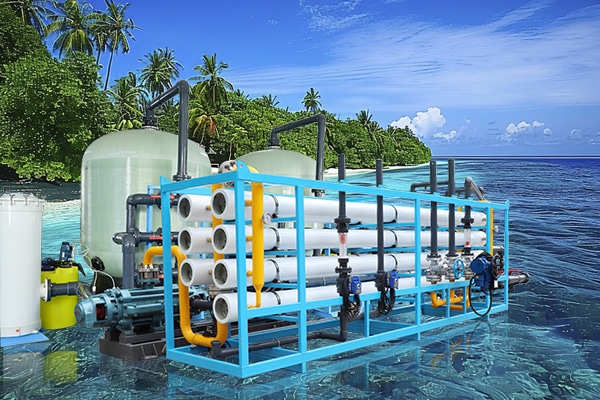
A seawater desalination machine removes salt and other dissolved solids from seawater and produces fresh water that meets drinking or industrial standards. Seawater usually carries about 35,000 mg/L of total dissolved solids (TDS), which makes it far too salty for people, crops, or boilers. Therefore, the machine must push that water through a special membrane that blocks salt yet lets pure water pass. This process is called seawater reverse osmosis, or SWRO. Meanwhile, the salty leftover, known as brine, flows safely back to the sea or to a disposal point.
The core idea sounds simple, yet the engineering behind it is precise. So a good machine balances pressure, flow, recovery rate, and energy use to deliver steady water quality day after day. Moreover, the system protects its own membranes through careful pretreatment, because clean feed water keeps the membranes working longer. We build every Chunke unit around this balance, and we test each one before it leaves our factory.
How Reverse Osmosis Desalination Works
Reverse osmosis flips the natural process of osmosis on its head. Normally, water moves from a low-salt side to a high-salt side through a membrane. However, a seawater desalination machine applies strong pressure to force water the other way, from the salty side to the fresh side. As a result, pure water collects on one side while salt stays behind. The whole journey runs through several clear stages, and each stage matters.
Step 1: Seawater Intake and Pretreatment
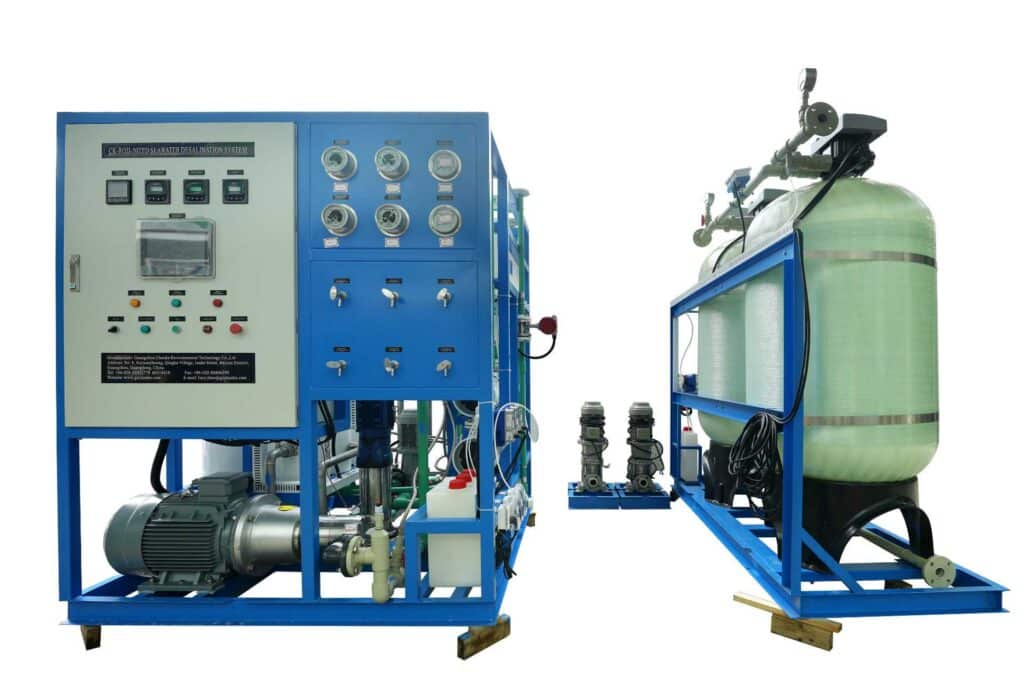
First, the machine pulls raw seawater from a beach well, an open intake, or a holding tank. Next, pretreatment removes sand, mud, algae, and oil before the water ever reaches the membranes. We typically use a multimedia sand filter, an active carbon filter, and a fine 5-micron cartridge filter. Furthermore, dosing pumps add antiscalant and sometimes sodium bisulfite to stop scaling and protect the membrane surface. Because seawater can change with the seasons, strong pretreatment keeps the machine stable all year.
Step 2: High-Pressure Pumping
After pretreatment, a high-pressure pump raises the water pressure to roughly 55 to 70 bar, which is the force needed to beat the natural osmotic pressure of seawater. We trust reliable brands such as a high pressure pump from Grundfos or Danfoss for this critical job, since pump quality decides both energy cost and machine life. Meanwhile, an energy recovery device can capture pressure from the brine stream and feed it back, so larger systems cut their power bills sharply.
Step 3: Membrane Separation
Now the pressurized water enters the membrane housings, where the real magic happens. The ro membrane rejects up to 99.7% of the salt and lets only clean water pass. We fit our seawater desalination machine with proven membranes from world leaders such as DuPont FilmTec, Vontron, Toray, LG Chem, or Hydranautics, because membrane quality drives water quality. Therefore, you get steady output and a long service life from every vessel.
Step 4: Control, Post-Treatment, and Storage
Finally, the fresh water passes through post-treatment, which may add minerals, adjust pH, or sterilize the water with UV or chlorine. A smart control panel runs the whole show, and we use a plc and HMI from Siemens to automate the process. So operators simply press start, watch the touch screen, and let the machine manage pressure, flushing, and alarms on its own. Hence, even staff with little training can run the system safely.
Key Components of a Quality Seawater Desalination Machine
Buyers often ask what separates a cheap machine from a dependable one. The answer lies in the components, so let us walk through the parts that matter most.
- Membranes: The heart of the machine. Premium seawater membranes reject more salt and last longer, which lowers your long-term cost.
- High-pressure pump: The muscle of the system. A strong, efficient pump keeps pressure steady and saves energy every hour it runs.
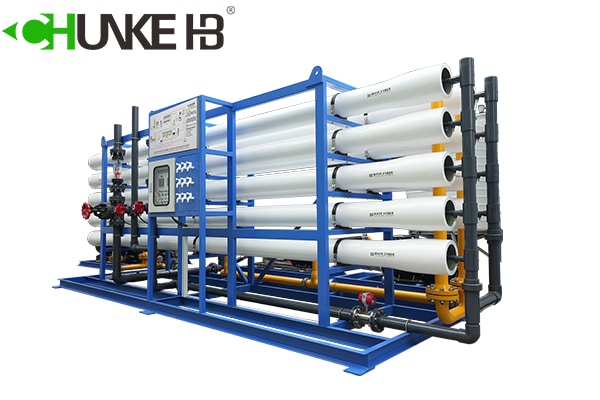
- Pressure vessels: FRP housings that hold the membranes. Good vessels handle high pressure safely for many years.
- Energy recovery device: A money-saver on bigger plants. It reuses brine pressure and cuts power use by up to 60%.
- Control system: The brain. A reliable PLC, clear HMI, and quality sensors keep the machine running without surprises.
- Pretreatment: The bodyguard. Sand filters, carbon filters, and dosing systems protect the membranes from fouling.
We match every component to your raw water and your output target. Therefore, you never pay for an oversized pump or settle for an undersized membrane bank. Instead, you get a balanced machine built for your exact site.
How to Choose the Right Seawater Desalination Machine
Picking the right machine starts with a few clear questions, so gather this information before you ask for a quote. Meanwhile, our engineers can guide you through each point.
1. How Much Fresh Water Do You Need Per Day?
Output drives everything. A small island home may need only 1,000 liters per day, while a hotel might need 50,000 liters, and a desalination plant might need 1,000 cubic meters. So tell us your daily target in liters or cubic meters, and we size the membranes and pump to match. Furthermore, we always add a safety margin so the machine meets demand even on hot, busy days.
2. What Is Your Feed Water Quality?
Salt level changes the design. Open ocean water near 35,000 mg/L TDS needs full seawater membranes and high pressure, while brackish water from a coastal well needs a lighter setup. Hence, a quick water test report helps us choose the right configuration. If you cannot test the water yet, we can still recommend a safe standard design based on your location.
3. What Power Source Do You Have?
Energy shapes the machine. Some sites run on a stable grid, while remote islands rely on diesel generators or even solar power. Therefore, we can build energy-efficient machines and add energy recovery to lower running costs. Meanwhile, for off-grid customers, we offer solar-ready and containerized options that travel well and install fast.
4. Where Will the Machine Operate?
Location affects build quality. Coastal air carries salt, so we use corrosion-resistant frames, duplex stainless steel, and protective coatings. Moreover, for harsh sites we offer a fully enclosed containerized seawater desalination machine that protects every part from sun, dust, and storms. So your investment stays safe for many years.
Where People Use Seawater Desalination Machines
Demand for fresh water keeps growing, and our machines already serve many industries around the world. Here are the most common uses we see every month.
- Islands and resorts: Tourist islands rarely have rivers, so they rely on desalination for guests and staff.
- Ships and offshore platforms: Vessels make their own fresh water at sea, which removes the need to carry heavy tanks.
- Coastal towns and villages: Communities gain a steady, safe water supply close to home.
- Hotels and real estate projects: Developers add reliable water to remote beachfront properties.
- Factories and farms: Industries get process water and irrigation water where groundwater is too salty.
- Emergency and military use: Mobile units deliver drinking water during disasters or remote missions.
Whatever your sector, we can tailor a machine to fit. So if your application is not on this list, just contact us and describe your needs.
Why Choose a Chunke Seawater Desalination Machine?
Many factories make water treatment equipment, yet experience and service set us apart. We have built reverse osmosis systems for years, and we ship to buyers across Asia, Africa, the Middle East, the Pacific islands, and beyond. Therefore, our team understands the real challenges that overseas customers face, from shipping and customs to local water and power conditions.
Moreover, we use only trusted global brands inside our machines, because reliable parts protect your investment. You can explore our wider range of solutions on our reverse osmosis water treatment system website, and you can study seawater projects in detail on our seawater desalination plant page. So you can see exactly what we build before you commit.
Here is what every Chunke customer receives:
- Custom design: We size each machine for your water, output, and power, so you never overpay.
- Premium components: Top membranes, pumps, and controls keep your machine running for years.
- Factory testing: We run and inspect every system before shipment, so it arrives ready to work.
- Clear guidance: We send manuals, drawings, and video support, so installation goes smoothly.
- Spare parts and service: We supply membranes, filters, and parts long after the sale.
- Fast response: Our sales engineers reply quickly and speak clear English.
Installation, Operation, and Maintenance Made Simple
Some buyers worry that a seawater desalination machine is hard to run, yet modern systems make daily work easy. First, we pre-assemble the machine on a skid or inside a container, so on-site work mostly means connecting pipes, power, and the seawater intake. Next, our team guides your staff through start-up by video or, for large projects, in person. Hence, your operators feel confident from day one.
Daily operation stays simple too. The PLC controls pressure, flushing, and alarms, so the operator mainly checks readings and records water quality. Meanwhile, routine maintenance follows a clear schedule. You replace cartridge filters often, clean the membranes when performance drops, and check the pump and dosing systems regularly. Furthermore, we explain every step in the manual and stand ready to help by phone or email. So your machine keeps producing clean water with very little downtime.
Standard, Skid-Mounted, or Containerized: Pick Your Build
One size never fits every site, so we offer three main build types. A skid-mounted seawater desalination machine sits on a compact steel frame, and it suits indoor rooms or sheltered plant buildings. Meanwhile, a containerized machine lives inside a sealed shipping container, so it ships easily and resists harsh weather, dust, and salty air. Furthermore, a custom plant fits large municipal or industrial projects, and we design it around your civil layout and output goals. Therefore, you choose the build that matches your space, your climate, and your budget, and we engineer every detail to support it. So you always receive a machine that feels purpose-built rather than forced to fit.
Understanding the Cost of Seawater Desalination
Cost always matters, so let us be clear about what shapes the price. The capacity drives the biggest part of the cost, because a larger output needs more membranes, a bigger pump, and stronger pretreatment. Meanwhile, the feed water quality, the level of automation, and any energy recovery also affect the final figure. Therefore, two machines with the same output can still differ in price based on these choices.
However, the running cost often matters even more than the purchase price. Energy use, membrane replacement, and filter changes make up the bulk of long-term spending. So we design our machines to lower energy use through efficient pumps and recovery devices, and we use durable membranes that last longer between replacements. As a result, your cost per cubic meter of fresh water stays low across the life of the machine. Hence, a slightly higher upfront price often saves you far more money over the years.
Frequently Asked Questions
Can a seawater desalination machine make safe drinking water?
Yes. Our machines remove salt, bacteria, and most dissolved solids, so the output meets WHO drinking water standards after proper post-treatment. Moreover, we can add remineralization and sterilization to improve taste and safety.
How long does a seawater desalination machine last?
A well-maintained machine runs for many years. The frame, pump, and vessels last a long time, while membranes typically need replacement every three to five years. Therefore, regular care keeps the system healthy and protects your investment.
Do you ship overseas and handle export?
Absolutely. We export to customers worldwide and arrange professional sea packing, clear documents, and container loading. So your machine arrives safely, and our team supports you through the whole shipping process.
Can the machine run on solar power?
Yes. We build solar-ready and containerized models for off-grid sites, so remote islands and farms can produce fresh water without a stable grid. Meanwhile, energy recovery further reduces the power your system needs.
Ready to Get Fresh Water from the Sea?
Clean water changes everything, and a reliable seawater desalination machine puts that water within your reach. So if you run a resort, a town, a ship, a factory, or a new coastal project, we can build the right system for you. Moreover, our engineers will guide you from the first question to the final start-up, and our service team will stand by you long after delivery.
Fill in the form below with your daily water need, location, and feed water type. Once you submit the form, our team will contact you within 24 hours with a custom solution and a clear quote. Hence, you take the first step toward a steady supply of clean, affordable fresh water today.
