
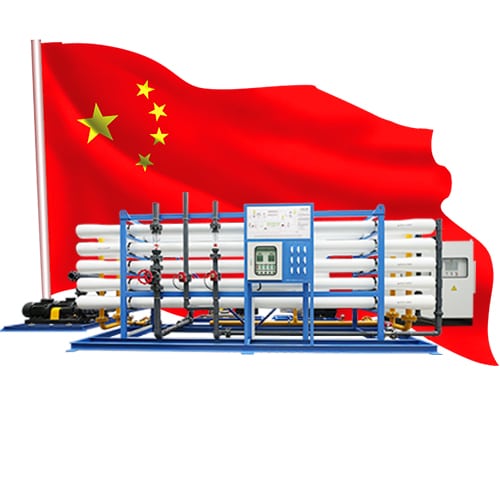
An industrial desalination plant manufacturer can directly affect your project cost, water quality, operation stability, energy consumption, maintenance work and long-term return on investment.
Many customers search for a desalination system because they need fresh water from seawater, brackish water, coastal groundwater or high-salinity industrial water. However, choosing the right supplier requires more than comparing one price with another price. A desalination plant works as an engineering system, not as a simple water filter. Therefore, the manufacturer must understand water chemistry, membrane design, pretreatment, high-pressure pumping, automation, corrosion protection, installation conditions and after-sales support.
In addition, industrial customers usually need reliable water every day. A factory may need process water. A hotel may need drinking water for guests. A power plant may need low-TDS water for boiler feed pretreatment. An island project may need stable water supply for the whole community. Consequently, one wrong design decision can cause high operating cost, frequent shutdown, membrane fouling, poor water quality or expensive modification work.
This guide explains how to choose a reliable industrial desalination plant manufacturer before you place an order.
1. Check Real Manufacturing Experience
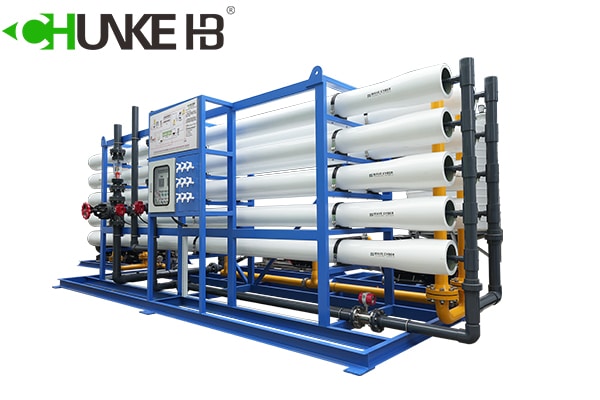
First, you should check whether the supplier actually manufactures desalination systems or only trades equipment. A real manufacturer controls design, material selection, fabrication, assembly, testing and quality inspection. Therefore, the manufacturer can solve technical problems faster and provide better support during the project.
Some suppliers only collect components from different workshops and sell them as a complete system. However, industrial desalination plants need process integration. The pump, membrane, pressure vessel, pretreatment filter, chemical dosing system, piping, valves and control panel must work together. If the supplier does not control the full system design, the project may face serious matching problems.
A reliable manufacturer should show real factory photos, workshop videos, project cases, welding or assembly capability, testing area and engineering team. Moreover, the supplier should explain previous projects with similar capacity and similar water source. For example, if your project needs a 500 m³/day seawater reverse osmosis system, you should ask whether the supplier has built similar SWRO systems before.
A strong industrial desalination plant manufacturer will not only say, “We can do it.” Instead, they will show technical logic, previous experience and a clear engineering plan.
2. Review the Technical Proposal Carefully
Next, you should ask for a complete technical proposal. A professional proposal should include process flow, design capacity, feed water conditions, recovery rate, product water quality, membrane model, pump selection, material selection, power consumption, automation level and scope of supply.
Many customers only check the final price. However, the proposal details often show whether the supplier understands the project. For example, the supplier should clearly explain the difference between feed flow and product flow. In seawater RO, the system cannot convert all seawater into fresh water. Part of the water becomes product water, while the remaining water becomes concentrate water. Therefore, the proposal should include recovery rate and concentrate discharge flow.
In addition, the proposal should state the product water TDS target. Drinking water projects may need TDS below 500 ppm, while industrial projects may need much lower TDS. Meanwhile, some projects require second-pass RO, UV sterilization, pH adjustment or remineralization. If the supplier does not ask about final water use, they may design the wrong system.
3. Confirm Water Analysis Before Final Design
Water analysis plays a key role in desalination design. Therefore, a reliable supplier should request a water report before final design. The report should include TDS, conductivity, pH, temperature, turbidity, hardness, alkalinity, chloride, sulfate, silica, iron, manganese and SDI if available. For industrial wastewater or special water sources, the report should also include oil, COD, bacteria and other contaminants.
Some customers ask for quotation without water analysis. In that case, the supplier can only provide a preliminary design based on assumptions. However, final design should use real water data. Otherwise, the system may face scaling, fouling, corrosion or unstable permeate quality.
For example, high hardness and high sulfate can increase scaling risk. High iron can foul membranes and cartridge filters. High turbidity can overload pretreatment. Meanwhile, high TDS requires higher operating pressure. Consequently, water analysis affects pump pressure, membrane quantity, recovery rate, antiscalant dosing and cleaning frequency.
A professional industrial desalination plant manufacturer will not ignore water chemistry. Instead, the company will use water analysis to protect system performance and reduce long-term operating problems.
4. Evaluate Pretreatment Design
Pretreatment protects the RO system, so customers should pay close attention to this part. Many low-price systems reduce cost by weakening pretreatment. However, this creates a major risk because RO membranes cannot handle dirty water directly.
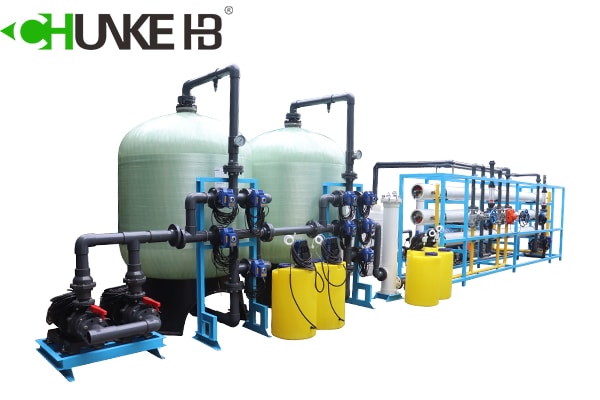
For seawater projects, pretreatment may include intake screening, raw water tank, chemical dosing, multimedia filter, activated carbon filter, ultrafiltration, cartridge filter and automatic backwash. For brackish water projects, the process may look simpler, but the design still depends on iron, hardness, turbidity and organic matter.
Moreover, pretreatment should match the water source. Open seawater usually needs stronger pretreatment than beach well water. Coastal groundwater may look clean, yet it may contain iron, manganese or hydrogen sulfide. Therefore, the supplier should not use one standard process for every project.
A good manufacturer also considers backwash water, chemical consumption, cartridge filter replacement and maintenance access. Meanwhile, the control system should monitor pressure difference across filters and remind operators when cleaning becomes necessary.
If the supplier only focuses on the RO skid and ignores pretreatment, you should be careful. A desalination plant needs stable feed water quality before the high-pressure pump and membranes.
5. Check Membrane Selection
Membranes strongly affect salt rejection, product water quality, operating pressure and maintenance cost. Therefore, you should check whether the supplier selects suitable membrane brands, models and quantities.
For seawater desalination, the manufacturer should use seawater RO membranes, not brackish water membranes. The design should also use reasonable flux and recovery rate. If the supplier uses too few membranes to reduce price, the membrane flux may become too high. Consequently, the system may foul faster and require more frequent cleaning.
A reliable industrial desalination plant manufacturer will explain why they choose a specific membrane model. Moreover, they will calculate system performance instead of only listing component names.
6. Check Pump Selection and Energy Consumption
The high-pressure pump works as the heart of a seawater desalination plant. Therefore, the pump must match flow rate, pressure and material requirements. Seawater has strong corrosion potential, so the pump wet parts need suitable stainless steel, duplex stainless steel or super duplex material depending on design.
In addition, energy consumption can become one of the largest operating costs in a desalination project. Therefore, medium and large SWRO systems may use energy recovery devices to reduce power consumption. Although energy recovery increases initial investment, it can reduce long-term operating cost, especially in areas with high electricity prices.
Hence, pump selection must support both stable operation and reasonable lifecycle cost.
7. Compare Material Selection and Corrosion Protection
Industrial desalination plants handle corrosive water, especially in seawater applications. Therefore, material selection matters greatly. Low-pressure piping often uses UPVC, CPVC, HDPE or FRP depending on pressure, temperature and project requirement. High-pressure seawater sections often need duplex stainless steel, super duplex stainless steel or other corrosion-resistant material.
The frame also needs corrosion protection. Many manufacturers use carbon steel with anti-corrosion coating for standard systems. However, coastal outdoor installations may require stronger coating, stainless steel frame or container protection. Meanwhile, valves, fittings and fasteners should also match the environment.
Customers sometimes compare two quotations and see a big price difference. However, one supplier may use better high-pressure piping, stronger valves, imported instruments or better coating. Therefore, you should compare the material list, not only the total price.
A serious manufacturer will clearly state material for pretreatment piping, high-pressure piping, permeate piping, concentrate piping, tank, skid frame and filter housing. In addition, they should explain which parts contact seawater and which parts only contact permeate water.
8. Review Automation and Control Logic
Automation improves operation safety and reduces operator mistakes. Therefore, industrial projects should use a clear control system. A basic system may use manual valves and simple electrical control. However, a larger industrial desalination plant should use PLC, HMI touch screen, pressure protection, flow monitoring, conductivity monitoring and automatic flushing.
Good control logic should protect the system from low pressure, high pressure, pump overload, tank low level, tank high level, poor product water quality and abnormal flow. Moreover, the system should allow manual operation for commissioning and maintenance.
For remote projects, automation becomes more important. Operators may not stay beside the machine all day. Therefore, alarms, automatic shutdown and clear display help customers manage the plant safely. In addition, some projects may need remote monitoring or data logging.
A reliable supplier should explain the operation sequence. For example, the system should flush before startup, check raw water level, start the feed pump, confirm pressure, start the high-pressure pump and then send qualified product water to the tank. If product water conductivity exceeds the limit, the system should divert water or alarm.
9. Check Factory Testing and Quality Control
Before shipment, the manufacturer should test the desalination system. Factory testing helps find leakage, wrong wiring, valve problems, pump rotation issues, instrument errors and control logic mistakes. Therefore, customers should ask what tests the supplier performs before delivery.
Common checks include pressure testing, pipe flushing, electrical inspection, motor rotation check, PLC function test, valve operation test, instrument calibration check and trial running when water conditions allow. For large systems, customers may also request FAT documents, photos, videos or third-party inspection.
Quality control should also cover materials and components. The supplier should check membrane model, pump model, pressure vessel rating, valve size, pipe material and electrical components. Moreover, the equipment nameplate, packing list, operation manual and wiring diagram should match the delivered system.
A strong industrial desalination plant manufacturer treats testing as part of production, not as an optional service. Consequently, the customer receives a more reliable system and starts site commissioning with fewer problems.
10. Understand Installation and Commissioning Support
Even a good desalination plant can perform poorly if the customer installs it incorrectly. Therefore, you should confirm what installation and commissioning support the supplier provides.
For skid-mounted systems, the customer must prepare foundation, raw water tank, product water tank, drainage, power cable, chemical area and enough maintenance space. For containerized systems, the customer still needs feed water connection, concentrate discharge, product water connection and power supply. Meanwhile, the supplier should provide layout drawings, connection points and installation guidance.
For projects in islands, remote areas or temporary sites, customers often prefer a <a href=”https://swro-plant.com/containerized-seawater-desalination-plant/” target=”_blank” rel=”noopener”>containerized seawater desalination plant</a> because it can reduce site installation work and protect the system inside a container.
During commissioning, the engineer should check the pretreatment system, chemical dosing, pump direction, valve positions, flushing sequence, membrane loading, pressure, flow, conductivity and recovery rate. In addition, the operator should receive training for daily operation, cartridge replacement, chemical dosing, alarm handling and membrane cleaning.
Before you choose a supplier, ask whether they can provide online guidance, site engineer service, commissioning documents and training materials. A reliable supplier supports the system after delivery, not only before payment.
11. Compare After-Sales Service and Spare Parts
After-sales service matters because desalination systems need routine maintenance. Cartridge filters need replacement. Chemical tanks need refilling. Pumps need inspection. Instruments may need calibration. RO membranes may need cleaning. Therefore, the manufacturer should provide spare parts and technical support.
A good supplier should offer operation manuals, maintenance schedules, troubleshooting guides, spare parts lists and recommended consumables. Moreover, they should reply quickly when the customer sends operation data or fault information. In many cases, engineers can solve problems by checking pressure, flow, conductivity, temperature and alarm records.
Customers should ask about warranty terms, response time, spare part availability and technical support language. Meanwhile, they should keep some critical spare parts on site, especially for remote islands or industrial plants where shutdown cost remains high.
A dependable industrial desalination plant manufacturer helps customers operate the plant for many years. Therefore, after-sales ability should influence your purchasing decision.
12. Avoid Choosing Only by Lowest Price
Low price can attract attention, but the lowest quotation does not always give the best value. Some suppliers reduce price by using fewer membranes, smaller pretreatment filters, cheaper pumps, weak control systems, poor materials or incomplete scope. As a result, the customer may pay more later through high energy cost, frequent cleaning, membrane replacement or modification work.
Instead of asking only, “How much does it cost?” ask better questions. Does the quotation include pretreatment? Does it include chemical dosing? Which membrane brand does it use? What material does the high-pressure section use? Does the system include PLC control? Does the price include container, installation, commissioning or freight? What product water quality does the supplier guarantee?
A professional buyer compares total value. Therefore, you should check technical design, component quality, energy consumption, maintenance cost, warranty and supplier experience. In many industrial projects, a slightly higher initial investment can reduce operation risk and long-term cost.
13. Ask for Project Cases and References
Project cases help you judge supplier capability. Therefore, ask for similar references in the same capacity range or same application. If you need a seawater desalination plant for a resort, ask for hotel or island cases. If you need an industrial plant, ask for factory or power plant cases. If you need containerized SWRO, ask for containerized project photos and videos.
However, do not only look at beautiful pictures. Ask technical questions about the project. What capacity did the system produce? What feed water TDS did it handle? What membrane brand did it use? Did it include energy recovery? How long did installation take? What product water quality did it achieve?
A confident manufacturer can explain project details clearly. Moreover, real cases show practical experience, not only marketing words.
14. Important Questions to Ask Before Ordering
Before you choose an industrial desalination plant manufacturer, you should ask several practical questions.
What water analysis data do you need before final design?
How do you calculate membrane quantity and recovery rate?
Which membrane and pump brands do you recommend for my project?
What material will you use for high-pressure seawater piping?
Does the system include automatic flushing and protection alarms?
What pretreatment process do you recommend and why?
What power consumption should I expect?
Can you provide layout drawing and connection points?
Do you test the system before shipment?
What spare parts should I keep on site?
How do you support installation and commissioning?
What information do you need from my site before production?
These questions help you compare suppliers more professionally. Moreover, they help you identify whether the supplier understands industrial desalination systems deeply.
Conclusion
Choosing a reliable industrial desalination plant manufacturer requires careful technical evaluation. You should check manufacturing experience, proposal quality, water analysis, pretreatment design, membrane selection, pump selection, material selection, automation, factory testing, commissioning support and after-sales service. Moreover, you should compare total value instead of only comparing the lowest price.
A good manufacturer does not only sell equipment. Instead, the manufacturer helps you convert difficult water into reliable fresh water with stable operation, reasonable energy consumption and practical maintenance. Therefore, before you buy an industrial desalination plant, take time to review the supplier’s engineering ability, project experience and long-term service support.
Chunke Water Treatment manufactures seawater desalination systems, brackish water RO systems, containerized SWRO plants and customized industrial water treatment solutions. If you plan a project for an island, resort, factory, power plant, fish farm, offshore platform or coastal community, our engineering team can help you choose a suitable process, capacity and configuration.
Send us your water analysis report, required product water capacity, project location and final water quality target. Then, our team will prepare a practical technical proposal and help you choose the right desalination solution for your project.

Comments are closed for this post.